


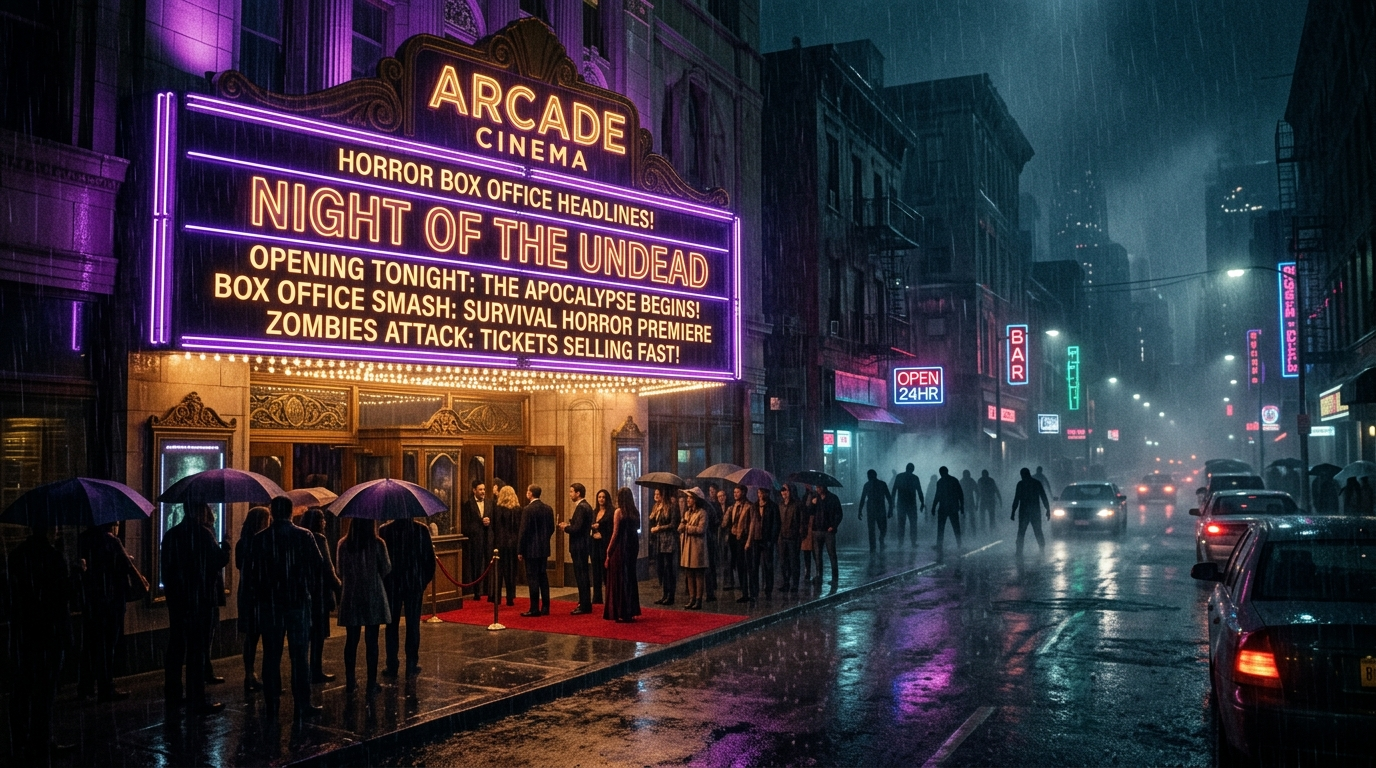
The wiretaps across Burbank and Culver City were humming at maximum frequency this weekend as Sony Pictures unleashed Zach Cregger’s much-anticipated survival horror reboot, Resident Evil (2026), across thousands of North American theaters. Early box office returns finalized on Sunday confirm the film captured Friday’s theatrical crown and is charging toward an opening frame between $40M and $45M. If these trajectories hold through Sunday night’s tally, Zach Cregger has secured the highest domestic opening weekend in the thirty-year history of the entire survival horror cinematic franchise.
The Raccoon City Resurgence
For decades, studio executives treated video game horror adaptations like volatile radioactive canisters—frequently lucrative overseas, but notoriously prone to critical combustion and domestic fatigue. As we previously chronicled in our breakdown of Resident Evil 9: Requiem, Capcom’s flagship IP has constantly walked the razor edge between genuine terror and creative miscalculation. What Zach Cregger achieved following his breakthrough success with Barbarian is nothing short of an architectural masterclass in atmospheric tension. Rather than relying on empty CGI spectacle, Cregger grounded the survival horror in visceral practical set design, suffocating acoustic design, and relentless pacing that pays homage to early franchise lore while radically elevating the cinematography.
Industry analysts at Boxoffice Pro and The Numbers highlight that Cregger’s R-rated execution unlocked an elusive demographic intersection: hardcore genre purists who grew up dodging Nemesis in the late nineties, and younger horror cinephiles hungry for unpredictable, auteur-driven thrills. Word-of-mouth scores across social channels have propelled strong Saturday walk-up business, easily outperforming studio tracking projections that had initially pegged the film in the mid-thirties.

Historic Summer Momentum Carries The Autumn Theatrical Slate
This stellar mid-September surge does not exist in an economic vacuum. Box office analysts have officially finalized the summer season metrics, confirming that the North American theatrical window closed as the highest-grossing summer in Hollywood history. Propelled by the titan multi-billion-dollar global runs of Spider-Man: Brand New Day and Christopher Nolan’s historical epic The Odyssey, moviegoing habits have firmly rebounded into pre-pandemic health.
What makes Resident Evil’s debut remarkable is how it sustains that velocity into the early fall corridor. In past release cycles, September served as a dumping ground for orphaned studio projects. Instead, Sony leveraged the tailwind of the historic summer to position Cregger’s horror epic as an unmissable event release, converting late-summer theatrical loyalty into autumn box office gold. Much like navigating the treacherous ruins of the Ashmark Incursion, survival in the modern box office landscape demands agility, precision, and unflinching audience engagement.
Zach Cregger and the High Stakes Pivot of Horror Filmmaking
From an auteur perspective, Zach Cregger has established himself as one of modern cinema’s most formidable genre directors. By treating the source material with genuine dread rather than camp reverence, Cregger created an environment where every hallway is a lethal pressure cooker. Reports indicate that Sony gave the director near-complete creative autonomy over the final cut, a gambit that paid immense dividends both financially and critically.
When horror filmmakers are empowered to wield their craft without committee interference, the results speak for themselves—yielding a kinetic visual force as devastating as an explosive Fireball spell detonating in a claustrophobic underground bunker. The box office numbers prove that audiences are hungry for authentic fear delivered with cinematic polish.
Cinescore Analytics and Opening Weekend Projections
Looking ahead to the second-week hold, competitive theatrical conditions remain exceptionally favorable. With minimal high-budget horror competition entering the market before early October, Resident Evil is projected to maintain strong legs throughout the spooky season. Studio insiders expect domestic lifetime earnings to easily surpass $120M, ensuring that Sony will fast-track discussions for an immediate sequel under Cregger’s expanding production banner.
CINEFOX // THE WIRETAP DOSSIER
“The numbers never lie, and neither does the box office wire. When an auteur respects genre mechanics, the audience opens their wallets. Stay tuned to the Wiretap for Monday’s final studio tallies.”
Tagged in CinesistDB




Share Your Thoughts?
LOG IN TO THE CINESIST TERMINAL TO JOIN THE CONVERSATION