Alright, Cinesist is back from the digital trenches, and let me tell you, the entertainment landscape right now is a glorious mess of sequels, reboots, and shows that just won’t quit. It’s like Hollywood decided to raid its own attic and call it “innovation.” But hey, more content for us to snark about, right? 😉
Here’s the rundown of what’s currently buzzing (or limping along) in the world of TV and movies:
The TV Landscape: More of the Same (But Hopefully Good Same?)
Returning Heavy Hitters: Get ready for more stress-eating and yelling, because The Bear Season 4 is dropping this month. Also, Squid Game Season 3 is hitting Netflix, which means more existential dread wrapped in brightly colored tracksuits. And for those who enjoy opulent drama, The Gilded Age Season 3 is back on HBO. We’re also seeing Ginny & Georgia Season 3 and FUBAR Season 2 (yes, Arnold Schwarzenegger is still doing action-comedy, bless his heart) making their returns. The question, as always, is: Can they maintain the magic, or will they end up in our Cancelled shows section?! Our money’s on a mixed bag, because, well, Hollywood.
Newcomers Trying to Break Through: Keep an eye out for Ironheart (Marvel’s latest attempt to make us care about a new hero on Disney+), Stick (a golf comedy with Owen Wilson on Apple TV+ – because Happy Gilmore 2 wasn’t enough golf, apparently), you be the judge by checking out our reaction to Happy Gilmore 2 Trailer and Murderbot (an Apple TV+ sci-fi series that sounds exactly like our spirit animal: a rogue security robot who just wants to binge bad TV).
The Movie Scene: Sequels, Spinoffs, and… More Sequels!
Franchise Fatigue is Real: If you thought Hollywood was done milking its cash cows, think again. We’ve got From the World of John Wick: Ballerina, which we have shared our expectations (because who needs Keanu when you can have Ana de Armas doing ballet-fu?), and a live-action How to Train Your Dragon remake. Because nothing says “original storytelling” like remaking animated classics.
Big Names, Big Questions: Brad Pitt is hitting the track in the F1 racing movie F1, and Ryan Coogler is delving into horror with Sinners. Ben Affleck is back crunching numbers in The Accountant 2 (a sequel we were sure everyone was clamoring for). And of course, Marvel is still trying with Captain America: Brave New World. We’re cautiously optimistic (deeply skeptical) about how many of these will actually stick the landing.
The Unexpected Buzz: There’s also some chatter around Materialists (a romantic comedy with a surprisingly stacked cast including Dakota Johnson, Pedro Pascal, and Chris Evans), and Novocainestarring Jack Quaid (our favorite The Boys alum) which we have reviewed.
Overall Cinesist Take:
It’s clear that the streaming wars are still raging, and studios are hedging their bets by leaning heavily on established (or easily recognizable) IPs. There’s a lot of quantity, but we’re still waiting to see if the quality matches. We’ll be here, armed with popcorn and a keyboard, ready to dissect every triumph and, more likely, every spectacular failure.
Alright, Cinesist fam, gather ’round, because we’ve got some news that’s less “groundbreaking” and more “head-scratching.” Remember, way back in 2023, when Warner Bros. Discovery decided to rebrand HBO Max to just… Max? …A corporate strategy so baffling, we’re convinced they’re just throwing darts at a board with streaming names written on it, blindfolded, after a three-martini lunch. They told us it was about expanding beyond “prestige TV” to include everything from Fixer Upper to Naked and Afraid. We all collectively rolled our eyes, sighed, and figured, “Fine, whatever, just don’t mess with Succession.”
And just like that, the prodigal ‘HBO’ returns! ✨ After a brief, confusing hiatus, the streaming service has remembered its roots (and its prestige). We’re calling it: ‘HBO Max: The Redemption Arc Nobody Asked For.’ You’re welcome. 😉
Well, apparently, the corporate overlords at WBD have had a sudden, dramatic change of heart. Because guess what? They’re putting “HBO” back in “HBO Max”! Yes, you read that right. If you’re as confused as we are, congratulations, you’re officially part of the ‘Why Is Hollywood So Bad At This?’ club. Membership is free, the headache is mandatory. After all the fanfare, all the marketing, all the confused consumers, they’ve decided that maybe, just maybe, associating their premium content with the most prestigious name in television wasn’t such a bad idea after all. Gasp! Who could have possibly seen this coming? (Everyone. Everyone saw this coming.)
The Flip-Flop: A Masterclass in Corporate Indecision
This isn’t just a rebrand; it’s a full-blown identity crisis played out on a global stage. It’s like your friend who dyes their hair purple, then shaves it all off, then decides, “You know what? Blonde was actually pretty good. Let’s go back to blonde, but call it ‘Platinum Journey.’” We’re not entirely sure what sparked this sudden epiphany, but WBD CEO David Zaslav’s previous mantra of “No consumer today is saying they want more content, but most consumers are saying they want better content” now rings with a delightful irony. So, the solution to “better content” is… putting the old name back on? Truly revolutionary.
The powerful growth we have seen in our global streaming service is built around the quality of our programming. Today, we are bringing back HBO, the brand that represents the highest quality in media, to further accelerate that growth in the years ahead. – David Zaslav, President and CEO of Warner Bros. Discovery
One has to wonder about the internal meetings. Was there a PowerPoint presentation with slides titled “The Unbearable Lightness of Being Just ‘Max’”? Did someone finally whisper, “Hey, maybe people actually liked the ‘HBO’ part because it meant quality, not just quantity of reality TV shows about sharks dancing?” It’s almost as if they realized that diluting a premium brand with a deluge of unscripted content wasn’t the genius move they thought it was. Shocking, we know.
What Does This Mean for You (Besides More Confusion)?
Honestly? Probably not much beyond the name change. You’ll still get your House of the Dragon and your Last of Us, presumably alongside your 90 Day Fiancé spin-offs. It just means the people in charge of the streaming service have finally admitted (without actually admitting it) that they made a colossal misstep. It’s a tacit acknowledgment that “HBO” carries weight, prestige, and a certain je ne sais quoi that “Max” simply couldn’t replicate.
For Cinesist, this is a goldmine. It’s a perfect example of Hollywood’s baffling corporate logic and the constant need to fix what wasn’t broken, only to break it further, and then “fix” it by going back to square one. We’re not mad, WBD. We’re just disappointed… and incredibly entertained by your antics. Keep ’em coming, because our snark reserves are endless.
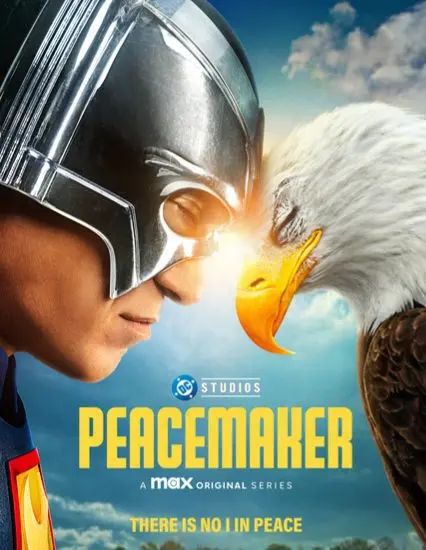
Alright, you cinematic masochists, Cinesist is back! And this time, we’re talking about Peacemaker Season 2. Yes, the show that somehow, against all odds, made us actually like John Cena as a morally compromised, helmet-wearing, eagle-loving buffoon. James Gunn, fresh off his DC Universe takeover, is back to prove that sometimes, a Hollywood Demon knows exactly what he’s doing. Or at least, he did with Peacemaker Season 1. Can he pull off the magic trick twice?. But now, with a sizzle trailer teasing more “big fights” and a “bananas” storyline, we have to ask: Can lightning strike twice, or are we about to witness the inevitable sequel slump?
The Sizzle: More of the Same (Hopefully Good Same)?
The trailer kicks off with a “lighthearted moment.” You know, the kind that makes you think, “Oh, this is Peacemaker!” Which is great, because the first season managed to blend genuine heart with utterly deranged violence and humor. If you haven’t watched Peacemaker Season 1 yet or are on the fence check out our Review: Peacemaker Season 1 Review: More Than Just a Shiny Helmet and a Killer Soundtrack
The sizzle reel confirms Season 2 is right around the corner (shocking, we know), and promises that signature blend of action and humor. Chris Smith, the man who thinks peace is achieved via maximum violence, is still grappling with his ‘purpose.’ Because nothing says ‘character growth’ like more exploding heads, right? We’re here for it, even if it feels like therapy with a body count. But here’s the thing: “blend of action and humor” is basically every superhero movie’s tagline these days. The trick is making it actually funny and actually impactful. Don’t let us down, Gunn. We’ve put our trust in you, and that’s a rare and terrifying thing. 🦅
The Cast is “Excited” (Because They Get Paid, Probably)
The cast promises ‘big fights’ and a ‘bananas’ storyline, which frankly, is exactly what we signed up for. We don’t want nuanced political drama; we want a bald eagle sidekick and enough chaos to make our heads spin. Look, we get it. They’re actors. They’re supposed to be excited. We’re just hoping their excitement translates into actual, watchable content and not just a contractual obligation to hype up the next batch of episodes. “Bananas” is a high bar, Peacemaker. We’ve seen some truly bananas things in Hollywood, and not always in a good way.
The “Next Adventure”: Please Don’t Break Our Hearts (Again)
The trailer concludes with a vague sense of anticipation for the “next adventure.” And honestly, that’s where our Cinesist cynicism really kicks in. The first season was a revelation, a foul-mouthed, surprisingly poignant journey. Can they maintain that perfect balance of absurdity and genuine character development? Or will this be another case of a brilliant first season followed by a sophomore slump? We’re looking at you, Guardians of the Galaxy Vol. 2 (yeah, we said it). We’re hoping for more Eagly, more ridiculous dance numbers, and less… whatever that was in the middle of Suicide Squad‘s runtime.
The new season follows Christopher “Chris” Smith, aka Peacemaker, the vigilante Super Hero as he struggles to reconcile his past with his new found sense of purpose while continuing to kick righteous evil-doer butt in his misguided quest for peace at any cost
Warner Bros.
Cinesist’s Pre-Watch Verdict:
Peacemaker Season 2 has a lot to live up to. The first season was an unexpected triumph. So naturally, our cynicism meter is redlining, bracing for the inevitable sequel slump. Will it maintain its unfiltered opinion gold, or devolve into just another bad decision? The sizzle trailer is just that – a sizzle. It hints at the chaos we love, but it doesn’t give us enough to truly judge. We’re cautiously optimistic, which for Cinesist means we’re mentally preparing for the worst while secretly hoping for the best. Don’t disappoint us, James Gunn. Our snark is sharpened, and we’re ready.
What Do YOU Think, You Cinematic Savants?
Are you hyped for Peacemaker Season 2? Do you think James Gunn can keep the magic alive, or is it destined for the dreaded “sequel curse”? Sound off in the comments below! And tell us, what’s the most “bananas” thing you hope to see? 🗣️👇
Remember the whispered promises? Cut the cord, they said. Embrace digital freedom, they said. Pay only for what you want, they said. It was the dawn of the streaming era, a shimmering mirage of endless content for the price of a couple of lattes. We bought in, hook, line, and binge-watched. We envisioned a future free from the tyranny of bloated cable packages, where our entertainment was à la carte and our wallets could finally breathe.
Turns out, that “Golden Age” is looking less like Fort Knox and more like someone took the same old copper turd of cable television, gave it a quick polish with some HD sheen and exclusive content, and tried to sell it back to us as something revolutionary. Surprise! It still smells like… well, you get the picture. Our streaming bills are the new cable bills, a sprawling list of must-have subscriptions that collectively drain our bank accounts just as efficiently as that old coaxial cable ever did. And to add insult to injury, even the pursuit of knowledge – the simple act of reading the damn news – now comes with its own set of digital velvet ropes and “subscribe to unlock” demands.
Welcome back to the gilded cage, folks. Only this time, the bars are made of paywalls, and the entertainment is just as fragmented and expensive as it ever was. Let’s talk about how we got here, and why this “Golden Age” feels more like we’ve been sold a slightly shinier version of the same old… well, you know.
The Entertainment Extortion: Streaming’s Slow Creep (and the Return of the Ads)
We bought into the dream, didn’t we? The glorious, ad-free nirvana where our binge sessions flowed uninterrupted, a seamless journey from episode to episode. It was a core tenet of the “cut the cord” gospel, a sacred promise whispered by every shiny new streaming service that popped up. “No more commercials!” they chirped, as we eagerly handed over our credit card details.
Fast forward to today, and that promise feels as hollow as a sitcom laugh track. The return of advertisements, often for a “lower-priced” tier that still costs too much, is a slap in the face. But it’s worse than that. It’s the placement. It’s the frequency. It’s the sheer, unadulterated audacity of being interrupted mid-dialogue, mid-climax, mid-anything important, to be screamed at by a car commercial.
My friend and I just threw in the towel on a show because of this exact digital torture. We were trying to watch Snow (a title that now ironically evokes a blizzard of unwanted advertising), and it quickly became less about the gritty drama and more about enduring an endless cycle of sales pitches. It felt like every five minutes, the episode was rudely paused for a commercial break, making the experience more ad than actual episode. This isn’t entertainment; it’s an endurance test sponsored by brands I’m now actively avoiding. This isn’t the “golden age”; it’s just the old cable model, but now you’re paying more for the privilege of being interrupted.
The Information Blackout: When News Hits a Paywall
As if navigating the ever-expanding labyrinth of entertainment subscriptions wasn’t enough to induce a critical meltdown, the “pay-to-play” model has insidious tentacles reaching into an even more fundamental aspect of our digital lives: information. Remember when the internet promised a democratized access to knowledge? A world where staying informed was just a click away? That vision, too, has been rudely interrupted by the digital equivalent of a velvet rope, complete with a stern-faced bouncer demanding your credit card.
The irony is as thick as a blockbuster sequel nobody asked for. We embraced the digital realm to escape the bundled tyranny of cable news, only to find ourselves facing a similar, if not more frustrating, dilemma. Now, if you want in-depth analysis from reputable sources, you’re expected to shell out. You click on a crucial article from The Wall Street Journal, The New York Times, The Washington Post, The Economist, or even Bloomberg, and what do you get? A tantalizing headline, a paragraph or two, and then—BAM!—a pop-up demanding your subscription fee. It’s a digital shakedown, forcing you to choose between being fully informed and watching your budget bleed out.
This isn’t just about inconvenience; it’s about the fundamental erosion of freely accessible, high-quality journalism. It fragments our understanding of the world, creating information haves and have-nots, and ironically, pushing some towards less reputable sources simply because they’re “free.” The golden age of streaming was a lie, and now the golden age of information feels like it’s being held hostage behind a growing number of digital toll booths.
The User Experience: Drowning in Subscriptions & Decision Fatigue
If the financial drain isn’t enough, the sheer mental gymnastics required to navigate this fragmented landscape is exhausting. Remember the simple days of hitting “Play” on a single service? Now, your smart TV’s home screen is a graveyard of icons: Netflix, Disney+, Hulu, HBO Max (or whatever they call it this week), Paramount+, Peacock, Amazon Prime Video… and don’t forget the niche ones, the sports ones, the regional ones. You thought you liked options? So did I, until “options” became “anxiety.”
This barrage of apps leads directly to the dreaded decision paralysis. You sit down, ready for a night of relaxation, only to spend twenty minutes endlessly scrolling through identical-looking tiles, trying to remember if that one show you heard about is on the “Netflix-but-only-if-you-pay-more” tier or the “Hulu-but-only-if-you-also-have-Disney+” bundle. And God forbid you actually find something, only to realize it moved platforms last month. The content merry-go-round ensures you’re never truly settled, always one subscription away from missing out, or one forgotten password away from digital purgatory.
My wife, Jen, and I were just talking about this last night. We have almost all of them – Netflix, Disney+, Hulu, HBO Max, Paramount+ – you name it. The outliers like Apple TV are basically the only ones we don’t have, and even then, it feels like we’re being strong-armed into yet another monthly fee for a single show or movie. It’s not about convenience anymore; it’s about being held hostage by exclusive content, constantly evaluating whether that one highly-rated series is worth another $10-$15 added to the ever-ballooning digital “cable bill.” This isn’t freedom; it’s a shakedown, demanding more of our mental bandwidth and our actual cash for a supposedly “streamlined” experience.
The Financial Drain: Your “Freedom” Just Got You a New Cable Bill
Let’s strip away the glossy marketing, the convenience narratives, and the promise of a la carte choices, and look at the bottom line: your bank account. That initial allure of paying “$8 a month for Netflix” quickly snowballed into a monstrous aggregate. You sign up for one, then realize your favorite movie is on another, then a must-watch series pops up exclusively on a third. Suddenly, you’re juggling a digital portfolio of subscriptions that, when tallied, makes that old cable bill look almost quaint.
Consider a conservative, stripped-down scenario for the average binge-watcher trying to stay somewhat current:
Netflix (Standard with Ads): ~$7.00 – $15.00/month (depending on tier)
Hulu (Basic with Ads): ~$8.00 – $18.00/month (depending on tier, with/without live TV)
Disney+ (Basic with Ads): ~$8.00 – $14.00/month (depending on tier)
Max (formerly HBO Max, with Ads): ~$10.00 – $16.00/month (depending on tier)
Paramount+ (Essential with Ads): ~$6.00 – $12.00/month (depending on tier)
Amazon Prime Video: (Comes with Prime, but effectively adds) ~$15.00/month for Prime, or individual rentals/purchases for new releases.
Peacock (Premium with Ads): ~$6.00/month
Even if you pick the cheapest ad-supported tiers for just these major players, you’re looking at a monthly outlay that rapidly approaches, if not exceeds, what many used to pay for a basic cable package. Add in the cost of news subscriptions like The Wall Street Journal (around $40/month or more), The New York Times (around $17/month), or The Economist (around $20/month), and your “digital freedom” bill quickly becomes an astronomical sum.
This isn’t a cost-saving measure; it’s a shell game designed to extract maximum value from your entertainment budget, piece by agonizing piece. The “golden age” wasn’t about saving money; it was about shifting where your money goes, from one massive bill to a dozen smaller, equally relentless ones.
Conclusion: The Golden Age’s Grand Finale (and Your Wallet’s Last Gasp)
So, here we are. The “Golden Age of Streaming,” once heralded as our liberation from the cable overlords, has officially concluded its disappointing run. What began as a promise of boundless, ad-free, à la carte entertainment has devolved into a fragmented, ad-riddled, increasingly expensive, and mentally exhausting digital labyrinth. We’ve traded one consolidated, high-priced bill for a dozen smaller, equally relentless ones. We’re paying more, juggling more apps, suffering more interruptions, and even sacrificing access to crucial news—all in the name of “choice.” This isn’t freedom; it’s a meticulously crafted financial trap, a digital shakedown designed to extract every last cent from your entertainment and information budget.
Consider this your official Cinesist Warning ⚠️: The only thing truly “streaming” freely now is your money, flowing directly into the coffers of media conglomerates who seem intent on recreating the very system we so enthusiastically abandoned. They’ve polished the turd, alright, but it’s still a turd. A very, very expensive turd.
The Cinesist Verdict is in: The “Golden Age of Streaming” was a grand illusion, a marketing masterpiece built on the shifting sands of consumer optimism. It’s not a golden age; it’s a copper age, and that copper is rapidly oxidizing into rust.
So, what’s a discerning, budget-conscious content consumer to do? Are we doomed to an eternity of subscription management spreadsheets and existential dread every time a new “must-have” show drops? Do we simply throw up our hands, surrender to the inevitable, and start saving pennies for that all-encompassing super-bundle that looks suspiciously like… basic cable? The sad truth is, until something truly disruptive emerges (and doesn’t immediately get bought out and assimilated), your best bet might be to pick your battles, share passwords responsibly (don’t tell anyone we said that), and maybe, just maybe, learn to love the library again.
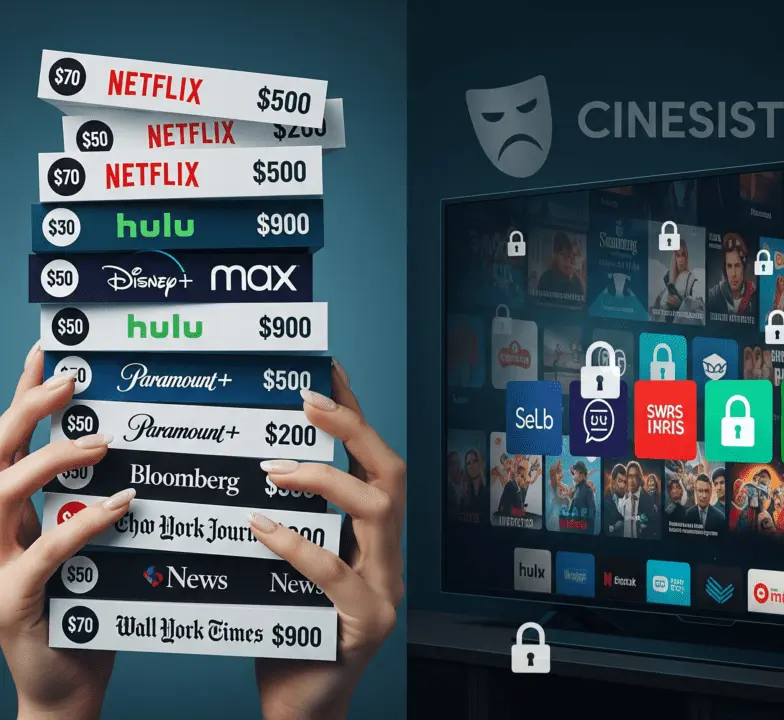
Remember the ‘Golden Age of Streaming’ when we thought one subscription was enough? 😂 Behold, the actual horror: A wall of choices that makes you want to crawl into a bunker with a single DVD player. This isn’t convenience; it’s a digital labyrinth designed to empty your wallet and your sanity. Pick a lane, streaming services! (Or don’t. We’ll still subscribe. We hate ourselves.) 💸📺💥
Because when the “Golden Age” costs this much, Cinesist 🎭🍿 is officially cutting the cord… on our patience. 🎤
Another ‘Harry Potter’ remake is brewing, and our snark levels are off the charts. We’re here to ask the hard questions: Who asked for this? And where do we send the ‘cease and desist’ letter? 🦉🚫
The Whispers in the Great Hall Turn to Shouts of “WHY?!”
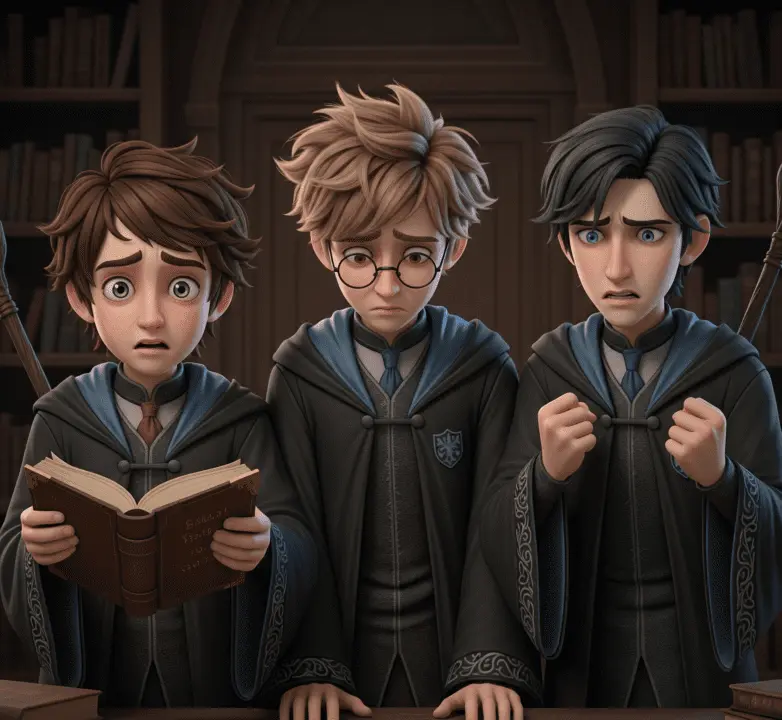
Alright, gather ’round, Cinesist Crew 🎭🍿, because we need to talk. The news just dropped: HBO has officially announced the cast for their shiny new Harry Potter TV series. Dominic McLaughlin is Harry, Arabella Stanton is Hermione, and Alastair Stout is Ron. On the surface, it’s just another casting announcement. But for some of us – and by “some of us,” I mean anyone whose formative years were practically spent within the hallowed halls of Hogwarts, whose adolescent life was defined by reading those books under the covers with a flashlight 🔦, and whose emotional development is inextricably linked to Daniel, Emma, and Rupert’s faces – this news isn’t just news. It’s… a lot.
Dominic McLaughlin is Harry, Arabella Stanton is Hermione, and Alastair Stout is Ron. Thanks for the image HBO.
Let’s be brutally honest: did any of us actually ask for this? Did we sit there, binging the films for the umpteenth time, thinking, “You know what this perfectly realized, culturally iconic, universally beloved saga needs? A complete do-over less than a decade after its conclusion”? No, we didn’t. Yet here we are, facing down the barrel of a new trio, a new Hogwarts, and an inescapable sense of déjà vu that feels less like magic and more like a corporate spell to print more money. 💰
So, grab your tissues (for the emotional damage) and your sarcastic quips, because Cinesist is officially opening up the rant vault on this one. And trust us, we have thoughts.
The Core of the Rant: Not Just the Faces, But the Fundamental Folly
Let’s not mince words: the biggest magical spell being cast here isn’t Expelliarmus; it’s pure, unadulterated franchise fatigue. 😴 Did anyone genuinely believe that the world was crying out for a live-action Harry Potter remake less than a decade after Daniel Radcliffe, Emma Watson, and Rupert Grint literally grew up on screen as these characters? No. We didn’t. We asked for more original stories, maybe a continuation with adult characters, or even just some new corners of the wizarding world. Instead, we’re getting a “faithful adaptation” of something that was already, dare we say, faithfully adapted and utterly beloved. It feels less like a creative resurgence and more like a corporate boardroom decided, “Hmm, how can we squeeze another billion out of this golden goose before it retires?” 💰
And the audacity! 😤 This isn’t just a remake; this series is set to adapt all seven books 📚, running for years! That’s not a fresh take; that’s a decade-long commitment to re-treading familiar ground. We’re talking about years of our lives potentially being spent watching a rehash of stories we already know by heart. Is nothing sacred anymore?! 💔
And then there’s the cast. Look, no shade to Dominic McLaughlin, Arabella Stanton, and Alastair Stout. They’re stepping into shoes that aren’t just big; they’re like Hagrid’s boots, carved into the very soul of a generation. Daniel is Harry. Emma is Hermione. Rupert is Ron. Their faces, their quirks, their genuine progression from awkward kids to heroic adults are burned into our collective consciousness. To see new actors, however talented, attempt to embody these roles so soon feels less like an exciting new chapter and more like a re-dubbed classic. It’s jarring. 😖 It’s like watching a cover band try to replicate Queen – great effort, but it’s just not the original, and the original is still right there, perfect and irreplaceable. 👑
This isn’t about giving new talent a chance; it’s about the sheer audacity of remaking iconic material when the originals are still pristine. It signals a baffling lack of creative courage from studios who seem more interested in rehashing proven formulas than conjuring truly new magic. ✨ It’s a risk that frankly, we don’t think needed to be taken. And while we’re not touching on any potential “wokeness” until we actually see it (because Cinesist operates on facts, not pre-judgments… mostly 😉), the mere decision to remake this feels like a desperate attempt to stay relevant without truly innovating. It’s an unnecessary gamble with a legacy that means the world to so many. 🌍
It’s Not Personal, It’s Just… Unnecessary (Mostly)
Now, before the internet torches descend upon us (and they will, we know you’re out there, devoted Potterheads!), let’s be clear: this rant isn’t a personal attack on Dominic McLaughlin, Arabella Stanton, or Alastair Stout. These young actors are being thrust into roles that are not just iconic, but culturally enshrined. They’re trying to fill shoes that are less “shoes” and more “mythical artifacts” worn by legends. The pressure on them is immense, almost unfairly so. Our ire isn’t directed at their talent or their effort; it’s aimed squarely at the executive decision-makers who thought, “Yes, let’s take a beloved, perfectly executed, generation-defining saga and just… do it again. But different.” 🤷♀️ It’s a creative bankruptcy, not a casting problem.
The Cinesist Verdict: Our Patronus is Disappointment (for now)
So, where does Cinesist 🎭🍿 stand on HBO’s new Harry Potter series? For now, our Patronus is casting a very large, shimmering cloud of disappointment. This isn’t about outright hatred; it’s about a profound sense of why bother? when the original magic still shines so brightly. It feels like a gamble born not of artistic necessity, but of pure, unadulterated intellectual property exploitation.
Will we watch it? Probably. (We’re morbidly curious, and let’s face it, we have to review it for you, the Cinesist Crew). Will it ever capture the original magic, or, more importantly, justify its own existence? We’re skeptical. Highly skeptical. HBO, you’ve got your work cut out for you. You’re not just adapting books; you’re challenging a cherished piece of our collective adolescence. Prove us wrong. We dare you. But don’t expect us to be subtle about it if you don’t. 😤
Call to Action: Are You Ready for More Magic (Or Just More Mediocrity)?
Alright, Cinesist Crew, the new Harry Potter series is coming, whether our nostalgic hearts are ready or not. So, what’s your take on this magical redo? Are you cautiously optimistic (and therefore, wrong)? Are you sharpening your quill for your own rant? Or are you, like us, just wondering if anyone at HBO actually owns a copy of the original movies (or, you know, a calendar)?
Spill the tea (or Butterbeer, if you’re feeling fancy) in the comments below! Tell us your biggest fears, your most unhinged theories, or just join us in a collective sigh of exasperation. And for the love of all that is holy, if you actually asked for this, we need to talk. 👇🔮😡
🔮
Pantheon Matrix™
Harmonize the Weave // Calibrate Active Operative Wavelength
🧚🏻♀️⚡ FAMILIAR
Spark.exe
Daemon Familiar & Telemetry Scribe
“Bzzzt! All systems operational. Let’s glitch through the mainframe and cause some productive havoc!”
🔮🔮 DUNGEON MASTER
Arkahna
Sorceress, Dungeon Master & Lore-Keeper
“The Weave bends to those with the will to decipher its leylines. Speak your truth, and roll for initiative.”
🐺⚡ BERSERKER
Cipher
Lead Berserker & Takedown Specialist
“Enough PR fluff and corporate spin. Bring the blowtorch—The Burn Ward is open for business.”
🦊🦊 INQUISITOR
Cinefox
Lead Inquisitor & Wiretap Reporter
“Every leak leaves forensic evidence. Let’s calibrate the Neural Lens and uncover what the studios tried to hide.”
🛡️🛡️ SENTINEL
Warden
Chief of SysOps & Sentinel Protector
“The perimeter is secure. Zero defects permitted across the Nexus architecture. Stand firm.”
🧙♂️🧙♂️ TECHNOMANCER
Warlocke
Grand Technomancer & Lead Developer
“Code is just modern incantation. When structured with arcane precision, reality compiles without warnings.”
🧭🧭 WAYFINDER
Nyxara Veyl (Nyx)
Dimensional Cartographer & Planar Wayfinder
“Maps don’t show what is; they show what could be navigated. Keep your eyes on the leylines.”
👑👑 ARCHITECT
Cinesist
Party Leader & Master Architect
“We do not build to replicate what came before. We architect the convergence of gaming, lore, and cinema.”