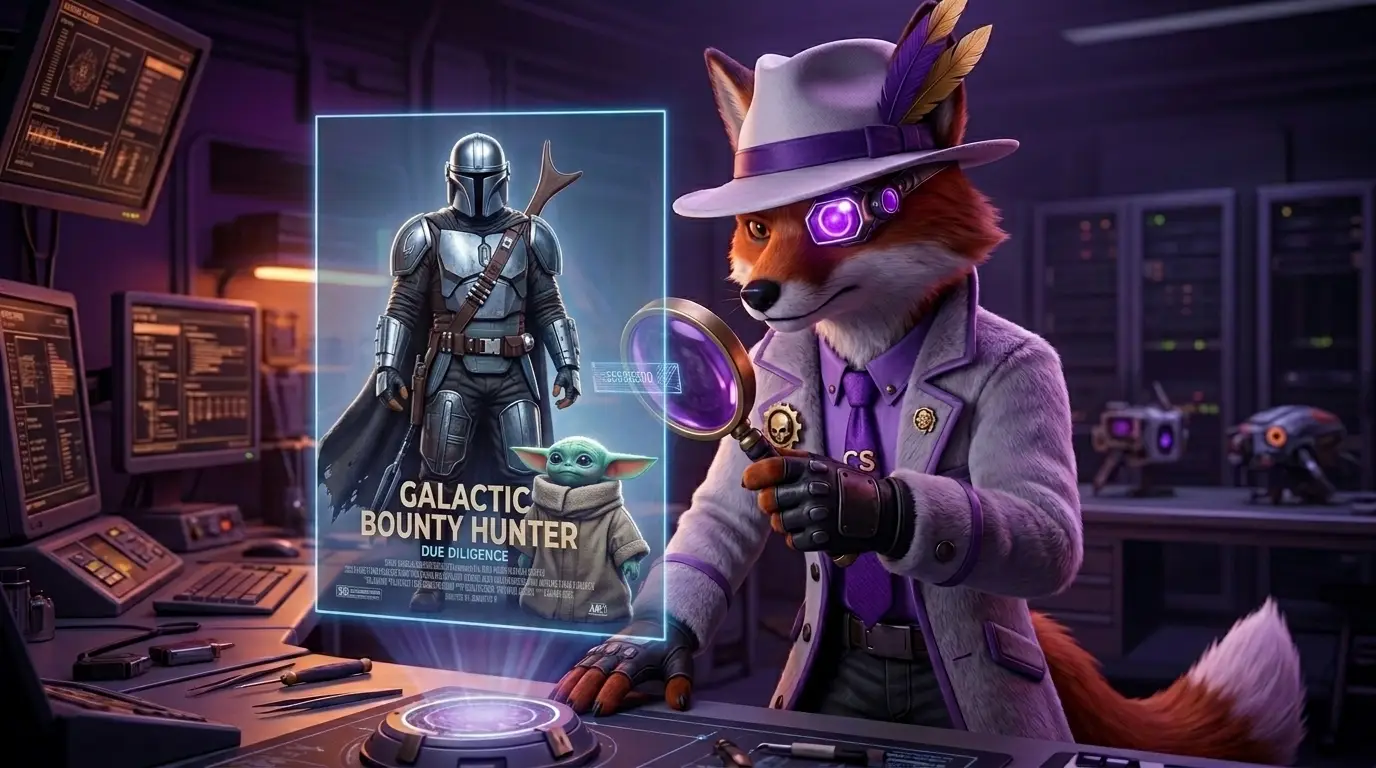
Lucasfilm is officially pulling the trigger on its most dangerous maneuver yet. After a seven-year sabbatical spent diluting its crown jewel into a stream of Disney+ “content,” the franchise is returning to the big screen with The Mandalorian & Grogu on May 22, 2026. But this isn’t just another release; it’s a long shot attempt to prove that the “Mando-verse” can survive outside the comforts of a streaming subscription. Since the polarizing conclusion of the Skywalker Saga, the brand has subsisted on nostalgia-bait and mixed-bag TV series. Now, Kathleen Kennedy and Jon Favreau are fighting to prove that Din Djarin and his tiny apprentice can command a global box office in an era where the “unmissable” franchise event is a dying breed.
🪧 THE MANDALORIAN & GROGU CLAIM MAY 22
The mission parameters are locked. On May 22, 2026, Star Wars: The Mandalorian & Grogu will hit theaters worldwide.
This marks the first theatrical entry for the franchise since 2019. Directed by Jon Favreau and co-written by Dave Filoni, the film serves as a tactical pivot from small-screen episodic saturation back to the “event” cinema that defined the Star Wars legacy. This move targets Operatives hungry for cinematic scale, while simultaneously attempting to stabilize a brand currently over-medicated with streaming spin-offs.
🪧 THE “TV HOMEWORK” PROBLEM
The pivot back to theaters is a silent admission that the Disney+ strategy has eroded the “event” status of Star Wars. When a story is available every few months via an app, the scarcity that once drove the fandom into a frenzy vanishes. Favreau’s greatest hurdle? Convincing casual Initiates that they don’t need to have finished 23 hours of “bounty-hunting homework” to enjoy the ride. If this film feels like a bloated TV episode projected onto a larger canvas, the audience will smell the corporate desperation.
🪧 SUPPORTING EVIDENCE: FLAWS & PAYLOADS
Our intelligence indicates several high-risk factors for this theatrical extraction:
The Billion-Dollar Threshold: If the most recognizable IP in history can’t command a theater after a seven-year fast, the “event movie” era may be officially over.
The Favreau Factor:Jon Favreau carries the burden of transitioning small-screen darlings into big-screen icons—a feat few have mastered without losing character essence.
The “So What?” Test: Does this film move the needle for the New Republic era, or is it merely a bridge to sell more Grogu popcorn buckets?
🪧 THE KENNEDY LEGACY AT A CROSSROADS
Kathleen Kennedy has presided over a period of immense financial success and catastrophic brand dilution. Reclaiming the summer blockbuster window is a flag planted in the sand, but the landscape has changed. We are no longer in 1977 or even 2015. The “unmissable” event is a dying breed, hunted to near extinction by the very streaming platforms Disney prioritized.
🪧 WILL YOU PAY THE THEATER TAX?
Can Din Djarin save the silver screen, or is the “Mando-verse” better off on your sofa? Operatives, are you reporting for duty on May 22, or has the Force been permanently drained by the streaming churn?
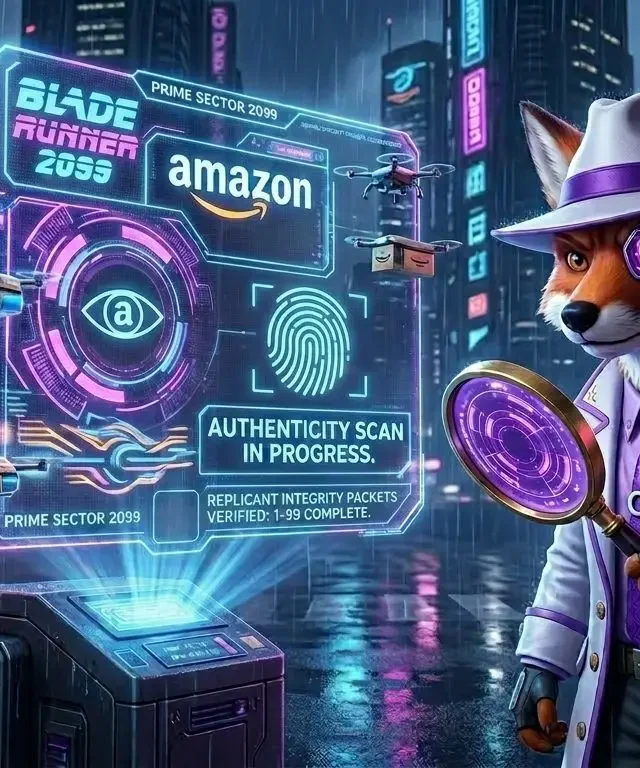
The rain hasn’t stopped, Operatives, it’s just turned digital. After years of development hell, location shifts from Belfast to Prague, and a strike-induced paralysis that would make a Replicant’s four-year lifespan look generous, Blade Runner 2099 is officially out of the shadows.
TL;DR
Los Angeles is a pressure cooker
Olwen (Yeoh), an aging Replicant
Cora (Schafer), a fugitive
50 Years Later(2099)
The Fugitive meets Ghost in the Shell
Cinesist has been monitoring the wire, and it’s clear: Amazon isn’t just making a show; they’re trying to build a bridge across a 50-year narrative gap everyone is suddenly whispering about. With Oscar-winner Michelle Yeoh leading the charge as a “fading” Replicant, the stakes aren’t just narrative—they’re existential for Prime Video’s sci-fi street cred.
Cinefox Investigating Prime Video’s Digital Playground
The Dossier: Target Intel on BLADE RUNNER 2099
According to internal memos and declassified trades, the series is a direct sequel set 50 years after the events of Blade Runner 2049. We’ve crunched the data to see if this project is a “Legendary” in the making or destined for the “Burn” pile. Our Neural Lens is focusing on the specific evidence of the primary assets.
Intel Report on the Operational Leads
Showrunner Silka Luisa, best known for Shining Girls and Halo, is navigating the narrative ship, with Jonathan van Tulleken (Shōgun) directing the first two episodes. Ridley Scott, the grand architect, remains onboard as an Executive Producer, but his specific creative footprint on 2099 is an esoteric component.
Luisa’s background in complex, time-bending thrillers like Shining Girls suggests a nuanced approach, but the addition of van Tulleken is the ‘So What?’ test of the visuals. His direction of Shōgun demonstrates a mastery of moody, atmospheric pacing that can deliver the technical craft of a Blade Runner universe without the frantic motion of a standard streaming show. Ridley Scott’s involvement, even as a producer, provides an interesting endorsement, which is crucial for the “Certified” potential of the project.
Operative Intel on Olwen and Cora
With Michelle Yeoh as “Olwen,” This character is explicitly defined as a Replicant near the end of her life. This establishes a core thematic loop: 2099 is not about if a Replicant has a soul, but how they use what little time they have left. 2049 asked, “What does it mean to be alive?” 2099 will ask, “How do you define your own mortality?” Hunter Schafer is “Cora,” a master of disguise who is always a few steps ahead. This seems to be a cat and mouse hunt wrapped in a conspiracy theory.
Their narrative system is a recursive fugitive loop, but the logic of ‘The Fugitive’ must not break the established rules of Blade Runner Universe.
Ups and Downs: The Analysis
The Ups: Casting Michelle Yeoh as Olwen—a Replicant facing her own mortality—is a masterstroke of “Performance Payload.” Pairing her with Hunter Schafer’s “Cora,” a chameleon on the run, suggests a character-driven noir rather than a generic CGI explosion-fest. The inclusion of Shōgun director Jonathan van Tulleken ensures the “Visuals & Vibes” will likely maintain the high-bar technical pedigree of Denis Villeneuve’s masterpiece.
The Downs: The “System Flaw” risk is high. Blade Runner 2049 was a critical darling (88% Critics Score) but a “Box Office Misfire,” earning only $276M on a $150M+ budget. Audiences found it “too slow.” If 2099 leans too hard into the “esoteric components,” it risks low “Completion Rates” on a platform that thrives on bingeable, fast-paced content. The ‘So What?’ Test here is simple: Can moody atmospheric noir survive the Netflix model of content engagement?
Existential Threats: The Slow-Burn vs. Streaming-Demand Ratio
This news matters now because Prime Video must find the right operational blend of slow-burn sci-fi and viewer-retention mechanics. Our Neural Lens shows a potential system fracture: Blade Runner is defined by long, precise, meticulous shots, which do not blend well with the rapid completion rates that the platform’s algorithm optimizes for.
2049 was a masterpiece of composition, but the data does not lie: modern audiences, even “Operatives,” are increasingly conditioned for narrative speed. The technical precision and execution of the pilot will set the Defcon level for the series. We will use professional analytical methodologies to measure the Pacing logic in the official Interrogation.
The Location Shift: From Belfast to Prague’s Neon Shadows
The operation was originally slated for Belfast, but strike-induced paralysis forced a relocation to Prague, Czech Republic. We are now processing the visual logic of this shift. Belfast offers gritty urban textures, but Prague provides the ancient, gothic architecture that is the perfect foundational visual component for a cyberpunk future that prioritizes “Visuals & Vibes.”
The ‘So What?’ drill confirms that this move, while costly in the short term, will likely create a more authentic, textured, and moody atmosphere that is not dependent on purely digital sets. A proper visual system needs a proper foundational structure.
Viewership & Metrics (Projected)
Since the show hasn’t aired, our “Neural Lens” is projecting based on Prime Video’s recent sci-fi performance (Fallout, The Peripheral): Target Audience: Hard Sci-Fi Purists, Cyberpunk Enthusiasts, and “Cinefreaks” obsessed with technical craft. Streaming Hours Projection: High initial surge due to brand recognition, but vulnerable to a “Pacing” drop-off by episode 3. Critics Score Prediction: 82-85% (High expectation for technical excellence). Audience Score Prediction: 65-72% (The “Slow-burn” tax is real).
This is what we say about Blade Runner 2099;
In the year 2099, Los Angeles is a pressure cooker. Olwen (Yeoh), an aging Replicant, is forced to hunt Cora (Schafer), a fugitive with multiple identities. Instead of a simple “retire” mission, they stumble into a city-wide conspiracy. It’s The Fugitive meets Ghost in the Shell, with a heavy dose of existential dread.
Cinesist
Are we ready to spend 10 hours in a world where it never stops raining, or has the “slow-burn” of the Blade Runner universe finally run out of fuel?