

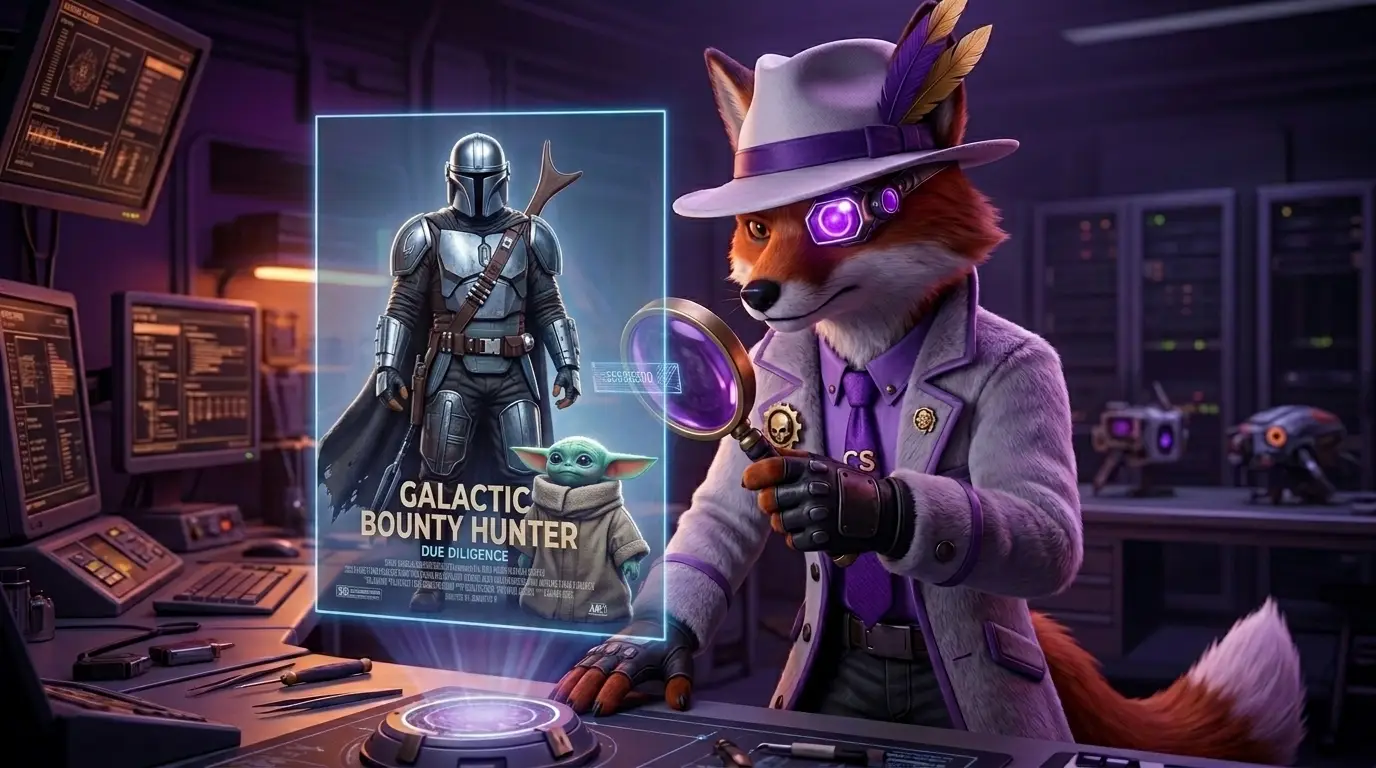
Lucasfilm is officially pulling the trigger on its most dangerous maneuver yet. After a seven-year sabbatical spent diluting its crown jewel into a stream of Disney+ “content,” the franchise is returning to the big screen with The Mandalorian & Grogu on May 22, 2026. But this isn’t just another release; it’s a long shot attempt to prove that the “Mando-verse” can survive outside the comforts of a streaming subscription. Since the polarizing conclusion of the Skywalker Saga, the brand has subsisted on nostalgia-bait and mixed-bag TV series. Now, Kathleen Kennedy and Jon Favreau are fighting to prove that Din Djarin and his tiny apprentice can command a global box office in an era where the “unmissable” franchise event is a dying breed.
🪧 THE MANDALORIAN & GROGU CLAIM MAY 22
This marks the first theatrical entry for the franchise since 2019. Directed by Jon Favreau and co-written by Dave Filoni, the film serves as a tactical pivot from small-screen episodic saturation back to the “event” cinema that defined the Star Wars legacy. This move targets Operatives hungry for cinematic scale, while simultaneously attempting to stabilize a brand currently over-medicated with streaming spin-offs.
🪧 THE “TV HOMEWORK” PROBLEM
The pivot back to theaters is a silent admission that the Disney+ strategy has eroded the “event” status of Star Wars. When a story is available every few months via an app, the scarcity that once drove the fandom into a frenzy vanishes. Favreau’s greatest hurdle? Convincing casual Initiates that they don’t need to have finished 23 hours of “bounty-hunting homework” to enjoy the ride. If this film feels like a bloated TV episode projected onto a larger canvas, the audience will smell the corporate desperation.
🪧 SUPPORTING EVIDENCE: FLAWS & PAYLOADS
Our intelligence indicates several high-risk factors for this theatrical extraction:
- The Billion-Dollar Threshold: If the most recognizable IP in history can’t command a theater after a seven-year fast, the “event movie” era may be officially over.
- The Favreau Factor: Jon Favreau carries the burden of transitioning small-screen darlings into big-screen icons—a feat few have mastered without losing character essence.
- The “So What?” Test: Does this film move the needle for the New Republic era, or is it merely a bridge to sell more Grogu popcorn buckets?
🪧 THE KENNEDY LEGACY AT A CROSSROADS
Kathleen Kennedy has presided over a period of immense financial success and catastrophic brand dilution. Reclaiming the summer blockbuster window is a flag planted in the sand, but the landscape has changed. We are no longer in 1977 or even 2015. The “unmissable” event is a dying breed, hunted to near extinction by the very streaming platforms Disney prioritized.
🪧 WILL YOU PAY THE THEATER TAX?
Can Din Djarin save the silver screen, or is the “Mando-verse” better off on your sofa? Operatives, are you reporting for duty on May 22, or has the Force been permanently drained by the streaming churn?
Leave a Reply
You must be logged in to post a comment.